


⚠️AlphaTrading is a Scam? Read AlphaTrading Broker Reviews🔍

AlphaTrading Broker Review
AlphaTrading presents itself as a professional brokerage platform offering access to global financial markets and tailored trading solutions. On the surface, the project imitates the structure and language of a legitimate broker. A closer examination, however, reveals a set of serious issues related to regulation, transparency, platform control, and client risk. This review provides a hard, fact-based analysis of AlphaTrading using a mixed format of explanatory text and structured points.

Company Background
AlphaTrading claims to have been operating since 2007 and emphasizes its supposed long-standing experience in financial markets. These statements are not supported by verifiable evidence. There are no historical records, archived regulatory data, financial reports, or credible media references confirming such a timeline.
Key concerns at this stage include:
- the absence of documented operational history;
- no public records confirming activity prior to recent years;
- reliance on self-declared experience rather than verifiable facts.
This pattern is typical of high-risk brokers that rely on marketing narratives instead of proven track records.
Regulation and Legal Status
AlphaTrading does not provide evidence of being regulated by any recognized financial authority. Although the broker references a U.S. address, it is not licensed by the SEC, CFTC, NFA, or any comparable international regulator.
The most critical regulatory gaps are:
- no disclosed license number or issuing authority;
- no supervisory body overseeing client fund protection;
- no regulatory framework for dispute resolution.
Operating without regulation means AlphaTrading is not subject to audits, capital requirements, or client fund segregation rules. As a result, users have no legal safeguards if issues arise.
Trading Instruments
AlphaTrading claims to offer a broad range of trading instruments, including:
- Forex currency pairs;
- commodities;
- cryptocurrencies;
- stock indices;
- shares of U.S. companies.
While this list appears comprehensive, the broker does not provide detailed contract specifications for these instruments. Information about lot sizes, margin requirements, trading hours, and underlying pricing mechanisms is missing. Without these details, clients cannot objectively assess trading costs or risk exposure.
Trading Platform
The broker operates a proprietary trading platform accessible via web, desktop, and mobile interfaces. Industry-standard platforms such as MetaTrader 4 or MetaTrader 5 are not supported.

Several platform-related issues stand out:
- no disclosure of the platform’s developer or technical audit;
- no information about liquidity providers;
- no clarification of the execution model (STP, ECN, or dealing desk).
Additionally, the platform infrastructure is hosted through external domains associated with generic trading software solutions. Such platforms allow full internal control over pricing and execution, making it impossible for clients to verify whether trades are executed on real markets or simulated internally.
Account Types
AlphaTrading advertises multiple account tiers designed to attract different categories of traders:
- Standard accounts with fixed spreads from 1.5 pips;
- Pro accounts with floating spreads from 0.8 pips and a stated commission;
- VIP accounts offering minimal spreads, zero commissions, and personal analysts.
At the same time, essential parameters are deliberately omitted:
- minimum deposit requirements are not published;
- leverage levels are undisclosed;
- margin call and stop-out conditions are not explained.
This lack of transparency gives the broker flexibility to change conditions after funds are deposited and places clients in a vulnerable position.
Deposits and Withdrawals
AlphaTrading states that clients can deposit and withdraw funds using bank transfers, cryptocurrencies, and online payment systems. Beyond this general statement, no clear rules are provided.
Critical missing information includes:
- withdrawal fees;
- processing timeframes;
- transaction limits;
- clear refusal criteria.
Reports from users suggest that withdrawal requests may be delayed or complicated by additional demands and internal checks. This approach is common among pseudo-brokers, where deposits are encouraged but withdrawals are tightly controlled.
Client Management and Sales Practices
The broker heavily promotes personal managers, proprietary analytics, and trading signals, particularly for higher-tier accounts. These services are marketed as added value but often function as sales tools.
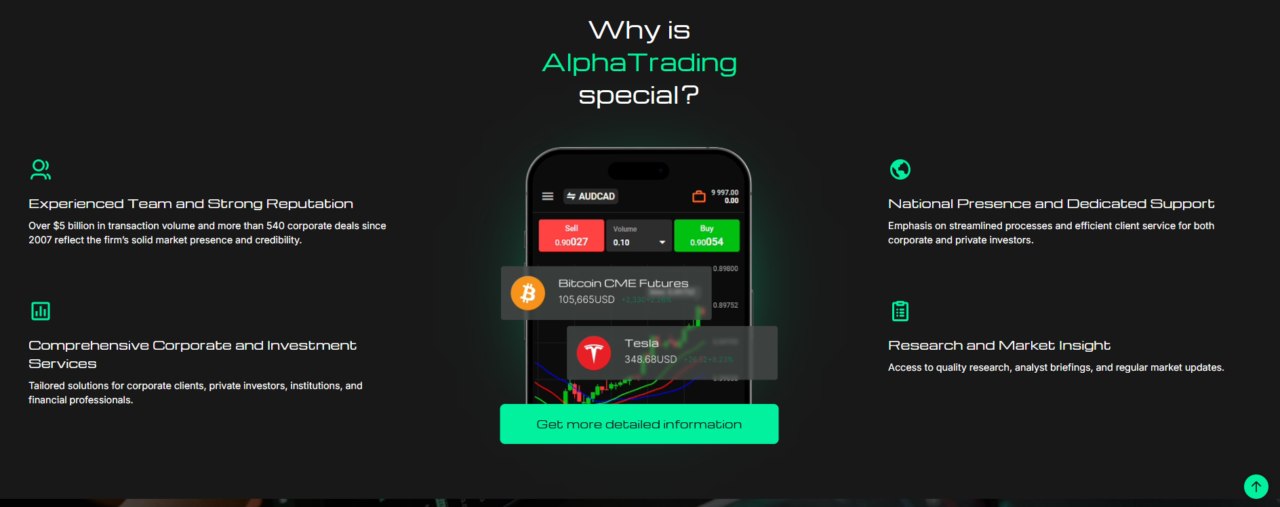
Typical characteristics of this model include:
- persistent pressure to increase deposits;
- promises of improved conditions after additional funding;
- no accountability for analytical recommendations.
Rather than focusing on transparent execution, the business model appears centered on retaining and increasing client deposits.
Conclusion
AlphaTrading demonstrates multiple warning signs associated with unregulated and high-risk brokerage operations. The absence of licensing, lack of legal transparency, proprietary platform with full internal control, undisclosed trading conditions, and problematic withdrawal practices collectively indicate a platform that does not meet the standards of a legitimate broker.
Engaging with AlphaTrading exposes users to significant financial risk without meaningful legal protection. Based on the available information, AlphaTrading should be approached with extreme caution and cannot be considered a reliable or transparent brokerage service.