


BitNest Review
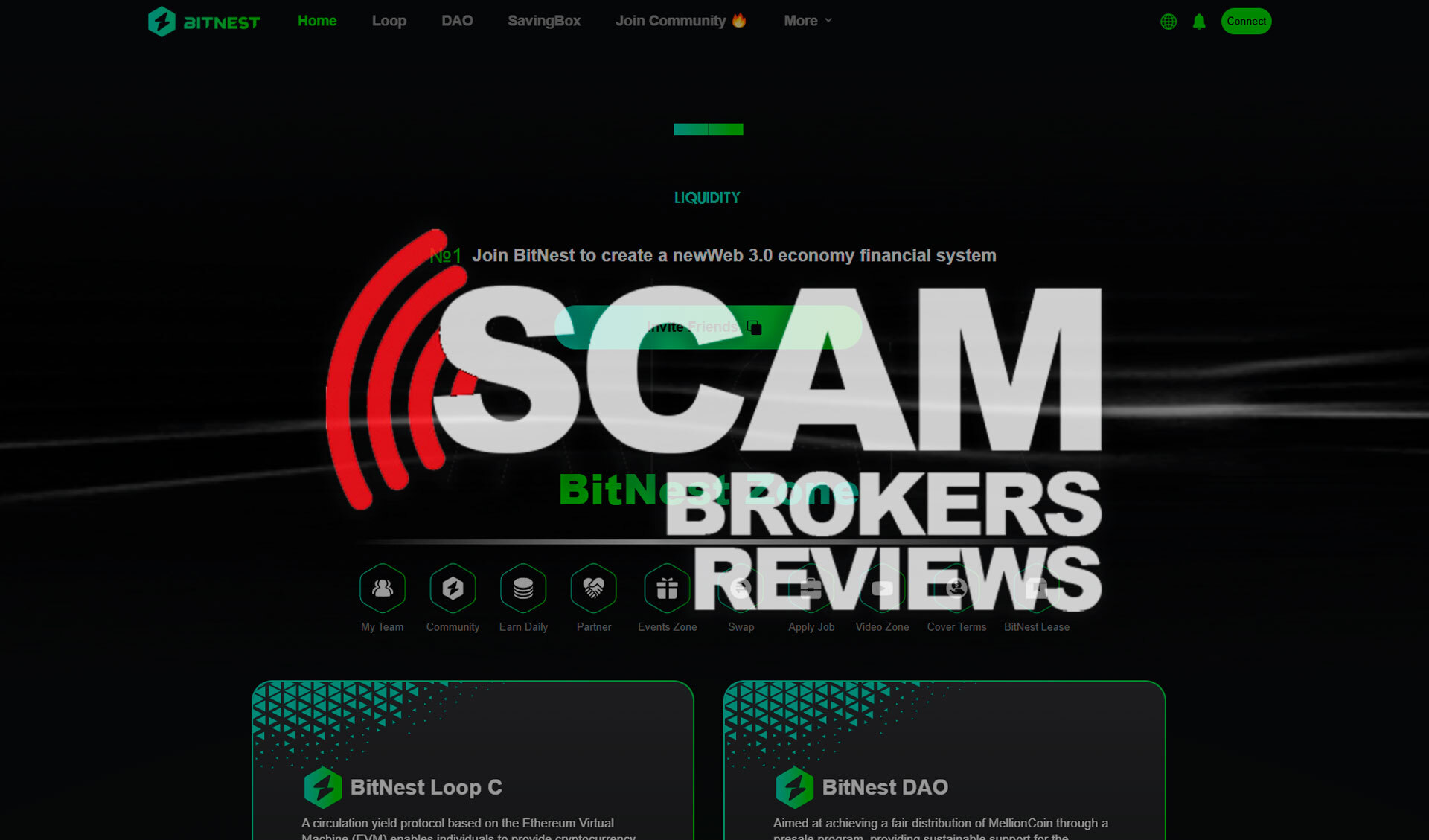
For a long time, BitNest presented itself as a decentralized crypto ecosystem where users could deposit USDT into investment products and receive predetermined returns. On the surface, the model looked like another DeFi project: users connected their own wallets, interacted with smart contracts, and did not need a traditional broker or financial intermediary.
But the central issue surrounding BitNest is not whether it used blockchain technology. The real questions are much more basic: where did the promised returns come from, how sustainable was the model, and what happened to users when the platform encountered problems fulfilling its obligations?

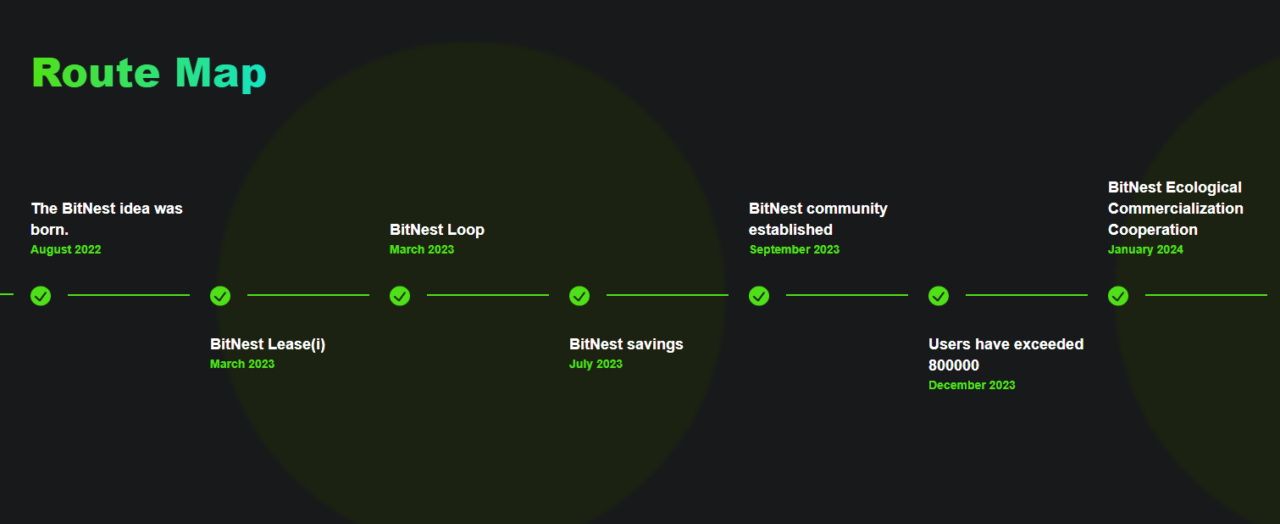
Looking at BitNest retrospectively is particularly revealing. The project did not simply change a few products or update its branding. In 2026, it underwent a major restructuring and transitioned into the Mera X ecosystem. At the same time, the project introduced the concept of “historical user rights” – essentially a separate mechanism for dealing with users’ previous positions and claims.
That sequence of events makes the BitNest story far more significant than an ordinary crypto platform review.
It Started With Predictable Returns
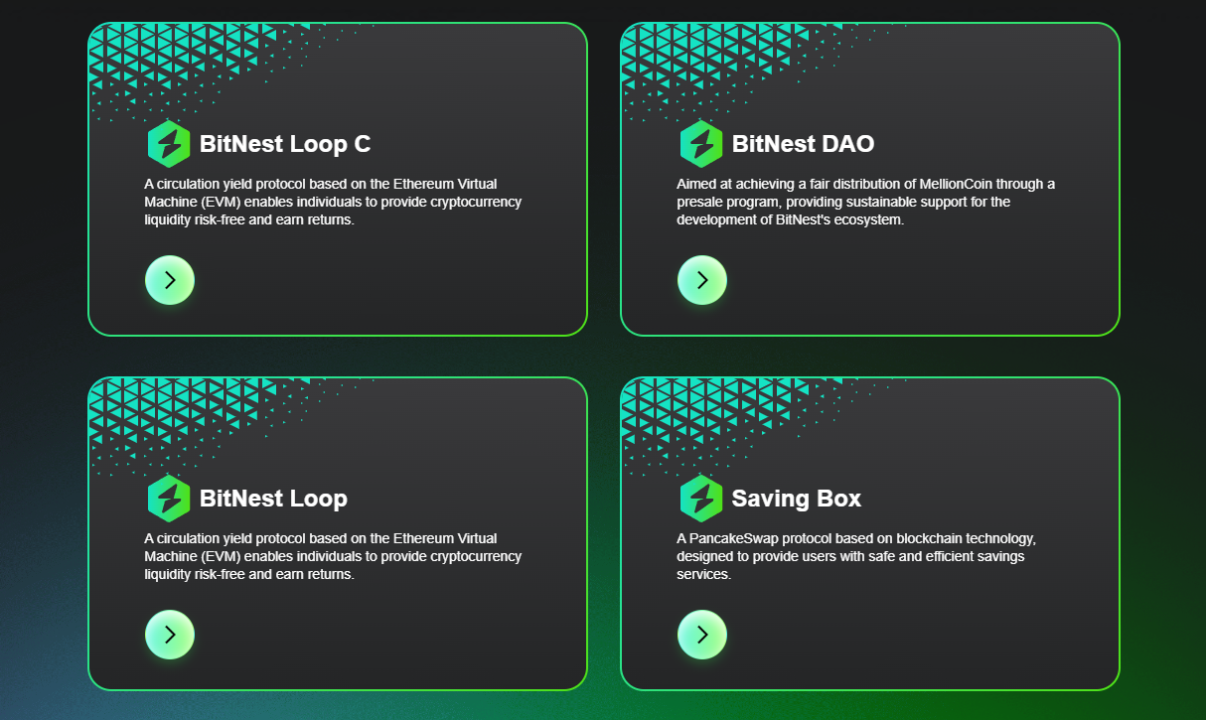
One of BitNest’s best-known products was BitNest Loop. The project’s materials described investment cycles of 1, 7, 14 and 28 days.
The advertised returns were:
- 1 day – 0.4%;
- 7 days – 4%;
- 14 days – 9.5%;
- 28 days – 24%.
These figures appeared directly in BitNest’s own materials. The project presented the system as being based on smart contracts and liquidity mechanisms.
From the user’s perspective, the proposition was straightforward: deposit cryptocurrency, select a period, and receive the funds back with a predetermined return.
This is where the first serious question appears.
A return of 24% over 28 days is not comparable to ordinary passive crypto exposure. A fixed return at that level requires a clearly identifiable and sustainable source of profit.
Blockchain technology does not answer that question. A smart contract can automatically execute programmed transactions, but it does not create economic profits by itself.
The Second Layer Was a Multi-Level Referral Structure
BitNest was not built solely around investment products.
BitLoop also incorporated a multi-level referral system. Project documentation described rewards extending across as many as 17 levels. Depending on the user’s activity and structure, commissions could be generated from multiple generations of referred participants. The published rates included 20% on the first level, followed by 10%, 5%, 3% and 1% across different levels.
This detail matters because it changes the economics of the platform.
A participant is no longer interested solely in their own deposit and investment return. They also have a financial incentive to recruit additional users. The larger the network becomes, the larger the potential referral rewards.
Third-party investigators subsequently described BitNest as having characteristics associated with an MLM structure and an investment pyramid. BehindMLM, for example, analyzed BitLoop, its advertised returns and its 17-level reward structure. This is a third-party assessment and should not be treated as a judicial finding of fraud.
Why Calling Something DeFi Does Not Solve the Problem
One of BitNest’s strongest marketing features was its use of familiar DeFi terminology: smart contracts, wallets, liquidity, decentralized ecosystem and DAO.
Users did not have to open a traditional brokerage account. Instead, they connected a crypto wallet and interacted directly with smart contracts.
Technically, this does distinguish the system from a conventional broker.
But decentralization does not automatically mean reliability.
If an investment product promises a fixed return, the source of that return needs to be understandable. If funds are supposedly used for liquidity provision, lending, trading strategies or another revenue-generating activity, investors need enough information to evaluate the economics of that activity.
Otherwise, “DeFi” becomes a description of the technology rather than evidence that the investment model is sustainable.
MellionCoin Added Another Layer of Risk
Another important component of the BitNest ecosystem was its internal token, MEC – MellionCoin.
This introduced another dependency on the project’s own ecosystem. Investors were no longer dealing exclusively with external assets such as USDT. They were also exposed to an internal asset whose value and liquidity were connected to the development and operation of the project itself.
That distinction is important.
If an investor receives returns in a liquid external asset, the economic situation is relatively straightforward. If the value is instead represented by an internal token, the investor faces additional liquidity and market risks.
A token displayed at a particular market value is not necessarily equivalent to the same amount of USDT that can actually be withdrawn.
For that reason, the emergence of MEC should not be treated as a minor technical detail. It introduced another layer of risk between the user’s original assets and their ability to realize value.
Then Came the Question of Existing User Obligations
The most significant part of the BitNest story emerged in 2026.
In June 2026, BitNest announced a restructuring and the transition toward Mera X. Materials describing the transition referred to the preservation of historical user data, accounts and rights associated with MEC, while presenting the new ecosystem as infrastructure for dealing with those historical positions.
The wording “historical user rights” is particularly significant.
If the project were simply launching a new and unrelated crypto product, there would be little reason to establish a separate mechanism for recording and processing users’ historical rights.
Yet that became one of the central issues surrounding the restructuring.
By September 2026, Mera X materials were still describing the collection, verification and processing of historical user data and rights. The process was presented as ongoing rather than as a completed settlement of all previous positions.
In other words, months after the restructuring, the question of previous user claims remained a separate process.
Recovering Funds Was No Longer a Simple Withdrawal
The recovery mechanism makes the situation even more significant.
According to published materials concerning Recovery Rights, users were presented with different settlement options. One option involved receiving 5% upfront and the remaining 95% over a period of 35 months. Another option involved converting confirmed rights into MEC, with the calculation based on the project’s proposed conversion mechanism and staged token issuance.
This is fundamentally different from a normal investment product.
If a user deposits USDT for a defined period and is promised the return of principal plus a stated return, the expected outcome is relatively simple: the corresponding assets should become available for withdrawal.
Here, the process became considerably more complicated.
The user first had to establish or confirm historical rights. Then they could potentially select a recovery mechanism. Under one option, most of the claimed amount would be paid over a period of 35 months.
The alternative involved MEC.
For the investor, this means that the original expectation of receiving cryptocurrency back was transformed into a future claim or exposure to an internal token associated with the new ecosystem.
Mera X Does Not Erase the BitNest History
Another important point is the relationship between BitNest and Mera X.
It would be misleading to discuss Mera X exclusively as an entirely unrelated new project when the project’s own materials describe the transition as a restructuring of BitNest and refer to historical user rights.
A new name does not by itself resolve the underlying question.
What happened to the previous investment obligations?
Why did those obligations require a separate historical-rights system?
Why were users presented with long-term recovery mechanisms rather than a conventional withdrawal?
These are more important questions than whether the new platform has a different interface, token structure or product lineup.
What Remains Behind the DeFi Wrapper
Remove the terms “Web3”, “DAO”, “smart contract” and “decentralized ecosystem”, and the sequence becomes relatively easy to understand.
Users were offered unusually high fixed returns.
The system included a multi-level referral structure.
The ecosystem incorporated its own token, MEC.
Questions subsequently emerged around users’ historical claims.
BitNest was then restructured into Mera X.
And those historical claims continued to be handled through a separate recovery process within the new ecosystem.
Each individual element can be explained through the language of DeFi.
The problem is what happens when all of these elements appear together.
The issue is not simply that cryptocurrency investments are risky. Crypto markets are inherently volatile, and legitimate DeFi protocols can also fail.
The more important issue is that the combination of high promised returns, recruitment incentives, an internal token and a subsequent restructuring created a much more complicated set of risks and obligations than the original investment proposition suggested.
Is BitNest a Scam?
The legal definition of fraud requires appropriate evidence and, where applicable, investigation and judicial findings. It would therefore be inaccurate to present a criminal finding that has not been established.
From an investment-risk perspective, however, the warning signs are substantial.
BitNest promoted unusually high returns, operated a 17-level referral structure, introduced its own token and ultimately underwent a restructuring in which previous users’ positions became “historical rights” subject to a separate recovery process.
By September 2026, the project’s successor ecosystem was still describing the verification and processing of those historical claims as an ongoing process.
That makes one point particularly important for anyone evaluating BitNest or Mera X today: the platform should not be judged solely by its smart contracts, website, wallet integration or DeFi terminology.
The outcome matters.
What began as a proposition that appeared relatively simple – deposit USDT, select a cycle and receive a high predetermined return – evolved into a much more complicated situation involving an internal token, restructuring and a separate mechanism for recovering historical user rights.
That history represents a serious warning for investors.
Anyone considering putting money into a project with this structure should demand clear evidence of the underlying revenue model, legal entity, regulatory status, asset custody arrangements, withdrawal mechanics and treatment of existing user obligations before committing funds.
In the case of BitNest, the most important story is no longer the return that was advertised.
It is what happened when those promises had to be reconciled with reality.