


TradeitX is a Scam? Read TradeitX Reviews🔍
TradeitX is not a broker you should send money to. It has no regulator, no verifiable company behind it, no disclosed trading conditions, and a trail of client complaints that all describe the same thing: money goes in, but it doesn’t come out.
About TradeitX
- Website: tradeitx-com
- Stated address: 42 Sukhumvit Road, Klong Toey, Bangkok 10110, Thailand
- Claimed founding year: 2015
- Company name in the footer and Terms: Netapal / Netapal Inc.
- License and regulator: none disclosed
- Contact: hi@tradeitx-com (no phone number)
- Markets: forex, crypto, binary options
- Platform: proprietary web terminal
- Domain registered: August 4, 2025
- Rating on independent platforms: 1 out of 5
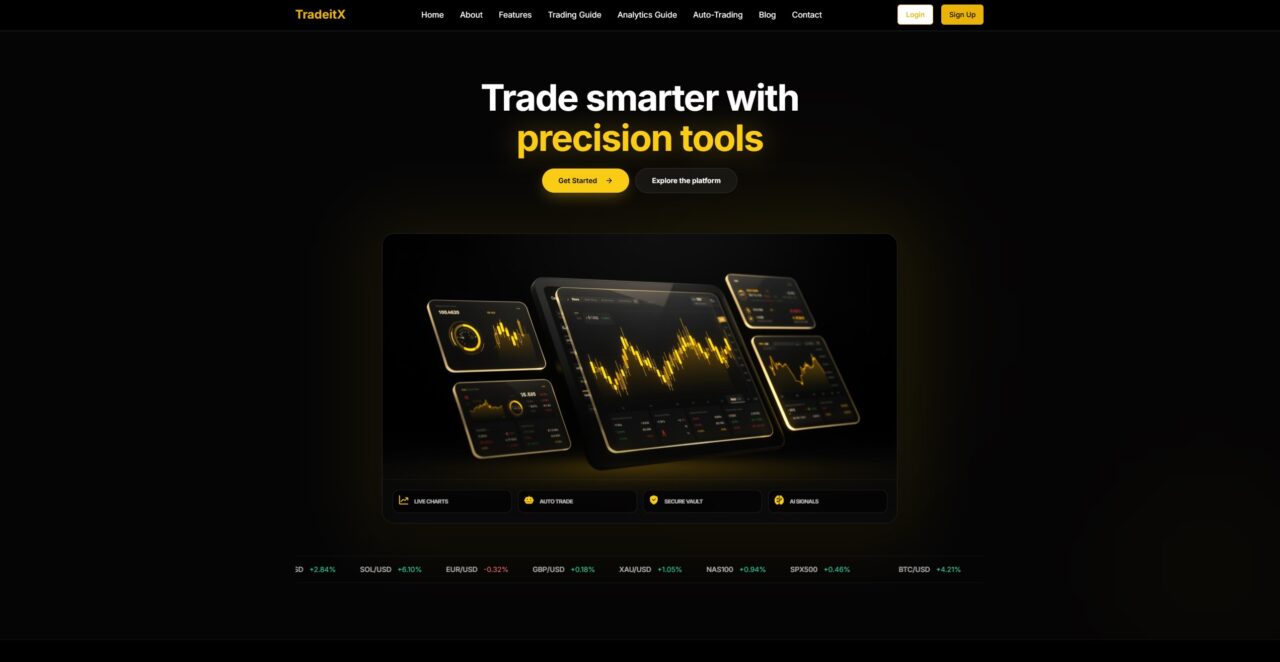
What TradeitX claims to be
The homepage slogan is “Trade smarter with precision tools”. The site promises AI signals, automated trading and “bank-level security”. We went through the site and the publicly available information about it, and what we found does not match the polished pitch.
A company with three names and no registration number
The first thing that stands out is the confusion over who actually runs the project:
- The domain says TradeitX.
- The footer and page titles say Netapal.
- The user agreement names Netapal Inc. as the operator and is governed by Delaware law.
Three names for one small website, and none comes with a registration number or any proof of incorporation. In practice, it is impossible to say who is responsible for client funds.
The licensing picture is just as empty. Neither the site nor any open source names a regulator. For a broker this is the biggest red flag there is, because if something goes wrong, there is nobody to file a complaint with.
What the TradeX domain records reveal
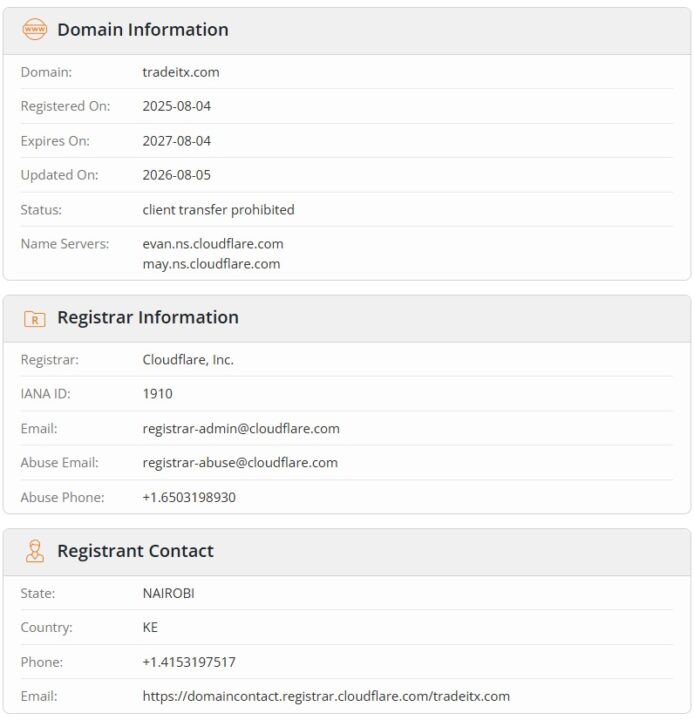
Whois data says more about this project than the website does:
- Registered: August 4, 2025
- Last updated: August 5, 2026, which may point to a change of owner or settings
- Registrar: Cloudflare, Inc., with the owner’s name hidden
- Registrant location: Nairobi, Kenya
- Valid until: August 4, 2027
So the stated office is in Bangkok while the domain belongs to someone in Kenya. The site also claims the company was founded in 2015, but the domain is barely a year old and has no history, so there is nothing to confirm a decade of operation. An impressive backstory attached to a fresh, anonymous domain is a pattern typical of fake brokers.
What scam-checking services say
Independent website checkers reach the same conclusion, although automated tools can make mistakes and should be treated as supporting evidence, not proof:
- Gridinsoft blocks tradeitx-com as a suspicious website, gives it a trust score of 1 out of 100 and lists a blacklist warning.
- Scamadviser rates the site “very likely unsafe” with a trust score of 0, noting the hidden Whois identity, the very young domain, and suspicious and phishing reports from IPQS.
- The title of the tradeitx-com page reads “Netapal – Advanced Trading Platform for Forex, Crypto & Binary Options”, which confirms that the two brands are one and the same project.
- The sister domain netapal-com was registered on March 13, 2025, and the Alertopedia database lists it as an unregulated fake exchange. The same source notes that such projects often reuse one website template under different names and domains.
Trading conditions that simply aren’t there
A genuine broker spells out how trading works. On TradeitX you won’t find:
- leverage, spreads or commissions;
- the order execution model;
- the minimum deposit or account currency;
- a working pricing page (the Pricing link in the footer leads to a 404 error).
What the site does offer is a lot of big phrases: “bank-level security”, “auditable withdrawals”, “real humans in support” and “AI signals”. None of these claims is backed up. There are no audit reports, no named banks or payment partners, and not even a phone line.
Deposits are free, withdrawals are not
According to the terms, you can fund an account by card, bank transfer, PayPal, Skrill, Neteller or crypto (BTC, ETH, USDT). Deposits cost nothing. Withdrawals do:
- e-wallets: 1–2%
- bank cards: up to 3%
- bank transfers: $15–30
- crypto: network fee only
- minimum withdrawal: $50 for most methods
The terms don’t state how long withdrawal requests take to process, and that is the most worrying gap. With fake brokers, trouble almost always begins at exactly this stage.
What clients say about TradeX
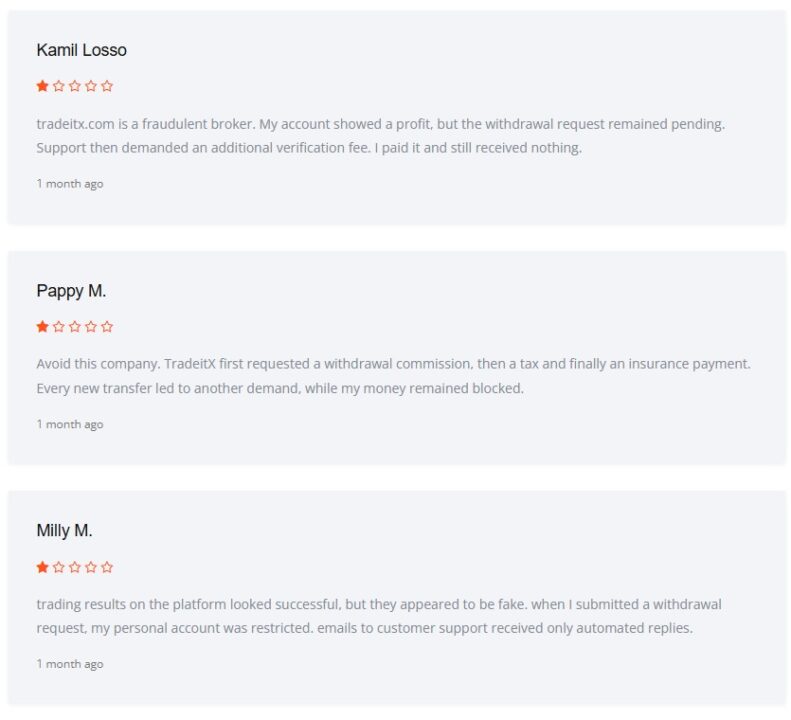
TradeitX has a low rating on independent review platforms, and the complaints are strikingly similar. One trader says he saw profit on his account, but his withdrawal request stayed pending forever. Support demanded a “verification fee”; he paid it, and the money never arrived. Another user describes a whole chain of demands: first a withdrawal fee, then a tax, then insurance, with every payment triggering a new requirement while the funds stayed locked.
A woman reports that the trading results in her dashboard looked successful but were apparently fabricated: after she requested a withdrawal, her account was restricted and her emails to support got only automated replies. A fourth client talks about a manager who called almost daily, pushing him to add more money. When he refused, the manager vanished, and he couldn’t recover even his original deposit.
All of this fits a familiar scheme.
How this kind of scam usually unfolds
These schemes tend to follow one script. It starts with a hook: an advert for “accurate signals” or a robot that supposedly predicts the market, or sometimes a new acquaintance on social media or in a messenger who casually mentions his trading success. The victim is then asked to open an account and make a first deposit, usually a small one.
Next comes the nice picture. The dashboard balance grows, and pop-ups announce big payouts to other clients, but these are just interface elements with no real trades behind them. To lull any suspicion, the scammers sometimes allow a small withdrawal. Once trust is built, the pressure begins: a manager urges the client to top up for “higher profits”, upgrade the algorithm or unlock paid robot features.
The trap closes when the client tries to take out a large sum. Suddenly a tax, insurance, a “verification fee” or an unlocking commission has to be paid first. After one more transfer, communication stops and the account is blocked.
Red flags in one place
- No license and no regulator
- Three names: TradeitX, Netapal and tradepro-com
- Office claimed in Thailand, domain registered in Kenya
- A website about a year old for a company “founded in 2015”
- Undisclosed trading conditions and a dead pricing page
- No phone number, email only
- Paid and opaque withdrawals
- Client complaints about extra payments when cashing out
- “AI signals” promised with no evidence of results
- Very low scores from independent scam-checking services
Already deposited? What to do
The most important rule is to stop paying. Every new “fee”, “tax” or “insurance” is part of the scheme, and none of them will unlock your funds. While you still have access, save all the evidence: screenshots of the dashboard, chat history, emails, and bank receipts or transaction hashes.
Then contact your bank or card issuer as soon as possible and ask about a chargeback or payment dispute, since the sooner you act, the better the chances. It is also worth reporting the case to your local financial regulator or the police, even if recovery looks unlikely, because reports help build a picture of how these projects operate.
Finally, be careful with anyone who offers to get your money back. Some of the posts warning about TradeitX online come from accounts inviting victims to message them for “recovery guidance”. A “recovery agent” who asks for an upfront fee is very likely running a second scam on the same victim.
TradeitX Verdict
TradeitX has no license, hides its real legal entity, switches names, doesn’t disclose its trading conditions and offers no proper contacts. Clients complain about blocked withdrawals and endless additional payments. We advise you not to deposit any money on this site and not to give in to a manager’s persuasion.


